
Pallet Sleeve Pack for industrial packaging, logistics, or closed-loop supply chains, one of the most critical decisions lies in the manufacturing process. Different molding technologies directly impact the pallet sleeve pack’s load-bearing capacity, durability, cost, structural complexity, and service life.
This article provides a comprehensive breakdown of the four core molding processes used in Pallet Sleeve Pack production—blow molding, vacuum forming, injection molding, and die casting—analyzing their advantages, limitations, and ideal application scenarios. A comparative summary is included to help buyers make informed decisions based on real industrial needs.
I. Blow Molding Process
Blow molding involves extruding molten plastic into a tubular parison, enclosing it in a mold, and inflating it with compressed air until it conforms to the mold cavity. After cooling, a hollow plastic component is formed.
This process is commonly used for integrated sleeves or hollow panels in Pallet Sleeve Pack systems.
Advantages
Lightweight Hollow Structure
The hollow design provides excellent shock absorption and cushioning, making blow-molded pallet sleeve packs suitable for logistics transport where vibration and impact protection are required.
Cost-Effective for Medium Volumes
Mold costs are significantly lower than injection molding. Material utilization is high, and recycled material can be reused, helping reduce overall Pallet Sleeve Pack production costs.
High Production Efficiency for Large Sizes
For large pallet sleeve packs (e.g. 1200×1000 mm), blow molding offers faster cycle times compared to injection molding.
Seamless One-Piece Design
Large and irregularly shaped sleeves can be produced without welding or splicing, ensuring good sealing performance.
Disadvantages
-
Uneven wall thickness limits dimensional accuracy
-
Lower vertical load-bearing and stacking strength
-
Typically suitable for light to medium loads (≤ 3 stacking layers)
-
Limited ability to integrate complex reinforcing ribs or precision locking structures
-
Moderate surface finish, not ideal for high-appearance requirements
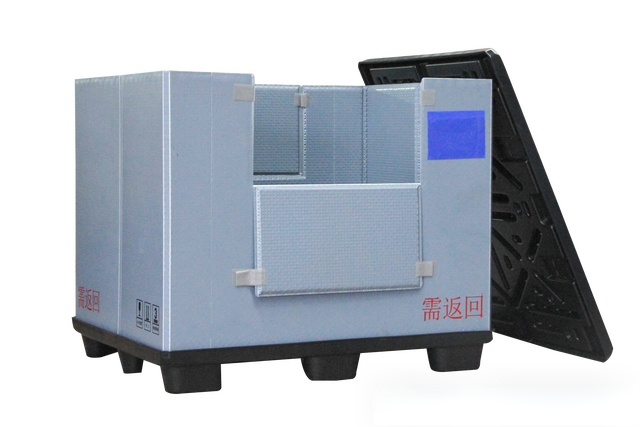
II. Vacuum Forming Process
Vacuum forming heats flat plastic sheets and uses vacuum pressure to shape them over a mold. This process is mainly used for side panels, simple lids, or inner liners of pallet sleeve packs rather than full structural systems.
Advantages
Lowest Tooling Cost
Molds can be made from wood, plaster, or aluminum, making vacuum forming ideal for low-budget or trial Pallet Sleeve Pack projects.
Fast Lead Time
Tooling can be completed in days, enabling quick response to urgent or customized packaging requirements.
Material Flexibility
Supports PP, PE, PVC, and PET sheets, including multi-layer or anti-static materials.
Suitable for Large Flat Panels
Large-format panels (up to 2000×1500 mm) can be produced without joining.
Disadvantages
Very low strength and poor load-bearing capacity
-
Thin, uneven walls (0.5–2 mm) prone to deformation
-
Limited durability, typically ≤ 5 reuse cycles
-
Simple structures only, no reinforcing ribs or locking features
-
Low automation and limited efficiency for mass production
Vacuum forming is best suited for temporary or disposable pallet sleeve pack solutions.
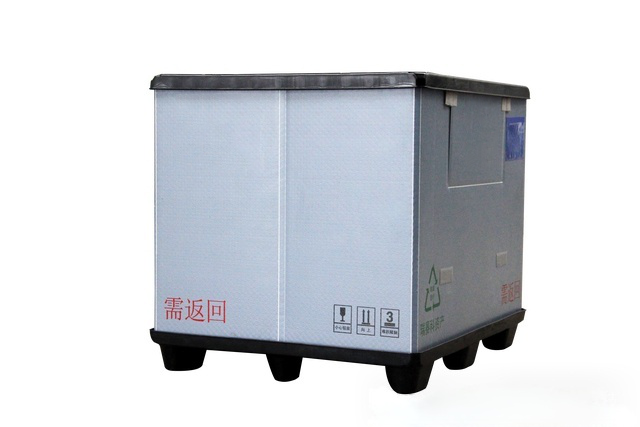
III. Injection Molding Process
Injection molding injects molten plastic into a precision mold under high pressure, producing highly consistent and structurally complex components. This process is widely used for pallet bases, top lids, locking systems, and high-strength pallet sleeve pack designs.
Advantages
Exceptional Dimensional Accuracy
Uniform wall thickness and tight tolerances (±0.1 mm) allow precise snap-fit, locking, and modular connections.
Superior Load-Bearing Performance
Dense reinforcing ribs and optimized structures enable heavy-duty pallet sleeve packs capable of stacking up to 10 layers and achieving 500+ reuse cycles.
High Structural Complexity
Supports integrated ribs, anti-slip surfaces, drainage holes, label holders, RFID slots, and industry-specific custom features.
Excellent Surface Quality
Injection-molded pallet sleeve packs offer premium surface finishes suitable for branding and high-end applications.
Ideal for Large-Scale Production
Multi-cavity molds and full automation enable consistent, high-volume output.
Disadvantages
Very high mold and equipment investment
-
Long tooling lead time (1–3 months)
-
Heavier product weight compared to blow molding
-
Size limitations for ultra-large pallet sleeve packs
Injection molding is best for standardized, long-term, heavy-duty Pallet Sleeve Pack programs.
IV. Die Casting Process
Plastic die casting is rarely used for full pallet sleeve packs but is ideal for high-strength precision components such as buckles, latches, connectors, and locating pins.
Advantages
Ultra-high dimensional precision
-
Dense, defect-free internal structure
-
Exceptional wear, impact, and corrosion resistance
-
High-speed automated production for small precision parts
Disadvantages
-
Extremely high tooling and equipment costs
-
Limited to small components only
-
Narrow material selection with higher raw material costs
-
Complex process control requiring skilled technicians
Comparative Summary: Choosing the Right Pallet Sleeve Pack Process
| Process | Cost | Strength | Precision | Best Use Case |
|---|---|---|---|---|
| Blow Molding | Medium | Medium | Medium | Lightweight, large hollow sleeves |
| Vacuum Forming | Low | Very Low | Low | Temporary or disposable panels |
| Injection Molding | High | Very High | High | Heavy-duty, long-term pallet sleeve packs |
| Die Casting | Very High | Extremely High | Ultra High | Precision locking & connectors |
Conclusion
There is no single “best” molding process for every Pallet Sleeve Pack. The optimal choice depends on load requirements, usage cycles, customization level, production volume, and budget.
-
For lightweight and cost-sensitive logistics, blow molding is ideal
-
For temporary or low-turnover packaging, vacuum forming is sufficient
-
For heavy-duty, reusable industrial systems, injection molding is the best choice
-
For precision components, die casting delivers unmatched performance
📩 Looking for a customized Pallet Sleeve Pack solution?
Contact us today for technical consultation, process selection advice, and factory-direct pricing tailored to your supply chain needs.